

Critical PHP Security Vulnerabilities (CVE-2026-109618 / CVE-2026-109619)
Be in no doubt the risk is massive if your website server runs the scripting language called PHP or Hypertext Preprocessor to serve pages. The PHP vulnerability, CVE-2026-109618, CVE-2026-1096 needs to be patched immediately.
The article is aimed at business owners, decision makers and IT managers.
What is PHP and this vulnerability? PHP is a server-side programming language that powers roughly 70% of websites, and **CVE-2026-109618 / CVE-2026-109619** (known as **PHP2Shell**) are critical memory-handling flaws in its core engine that allow unauthenticated remote code execution (RCE).
See https://watchtowr.com/intelligence/php-cve-2026-109618-faq/
Vulnerabilities CVEs with a Common Vulnerability Scoring System CVSS score of 9.0 or higher are designated as critical, given the substantial risks they pose to affected systems.
What are the affected Services? Websites and applications running PHP (all versions) on all platforms like cPanel.
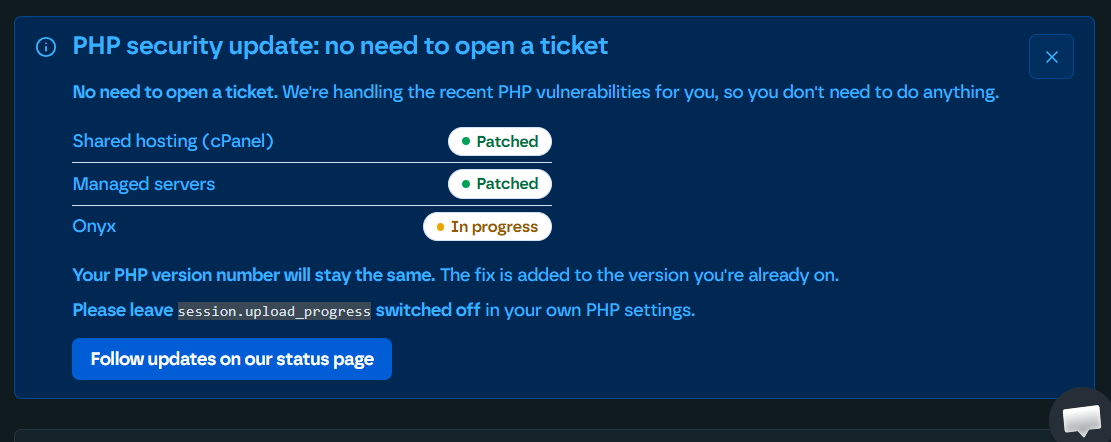
How does this attack work? An attacker sends a crafted HTTP request to a server, intentionally forcing an out-of-memory (OOM) error or fatal error that triggers a longjmp() function, which corrupts PHP’s internal memory or leaves behind dangerous "stale" global references for subsequent requests to exploit.
See https://www.youtube.com/watch?v=BAoKuAB2h_E
How do you know if you are running a PHP website? You can check if your site runs on PHP by looking for a .php extension in your URLs, verifying if your CMS (like Drupal or WordPress) requires it, or inspecting your site's HTTP response headers for a X-Powered-By: PHP tag.
curl -I https://lockdownmarket.com
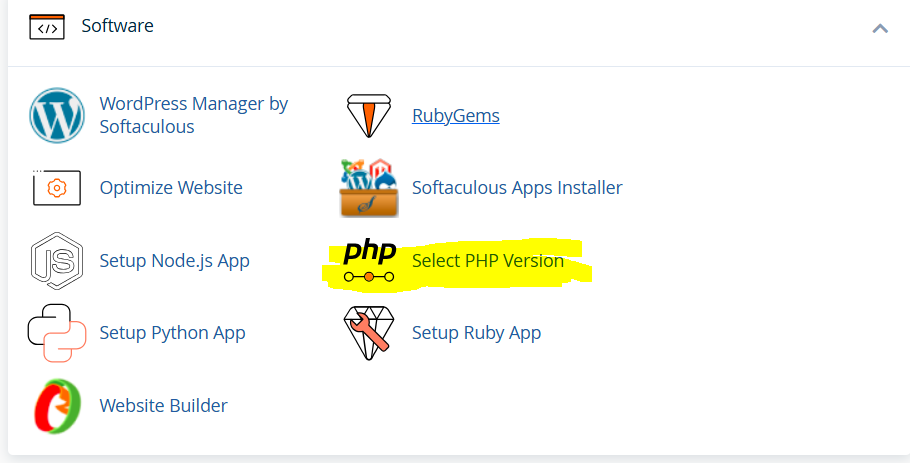
PHP version in cPanel
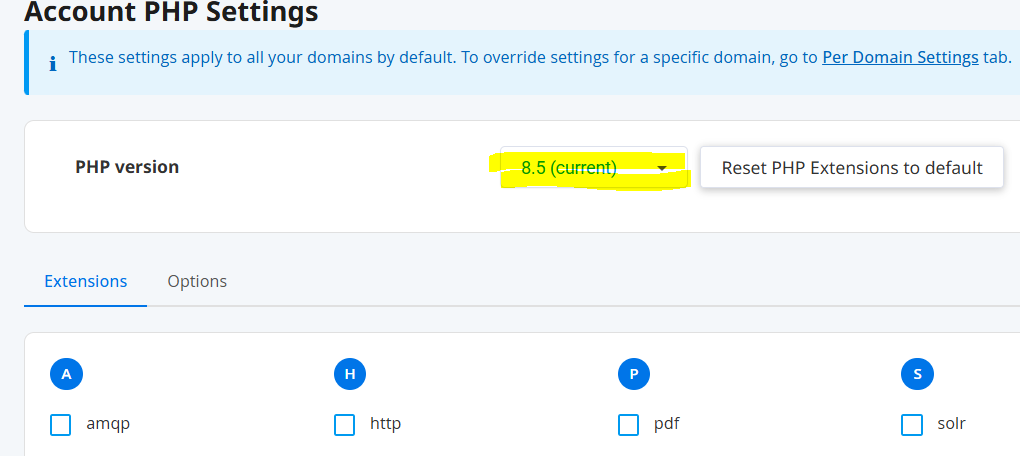
PHP version 8.5 updated
Who is responsible for this? The underlying memory-safety bugs have existed in the core PHP codebase for decades, but frontier AI tools were recently used by researchers to chain these incredibly complex flaws into a practical, working exploit.
See https://www.wiz.io/blog/php2shell-php-rce
Why should I be concerned? These flaws affect virtually every PHP web runtime environment (including PHP-FPM, Apache mod_php, and FrankenPHP), require zero authentication to exploit, can lead to total server takeovers, and active exploitations have already begun in the wild.
See https://www.sophos.com/en-us/security-advisories/sophos-sa-20261021-php2shell
If you run a business website on a Saas platform like GoDaddy with cPanel hosting the attackers can access your personal account data, your business email application/account with contacts and addresses, your database with customer/client data, domains, webserver, web files, backups, SSH access for remote control and terminal command. See below for Risks.When did this come about when will it all be fixed? The flaws leaked and details spread on October 20, 2026, prompting official patched versions (8.5.12, 8.4.27, 8.3.36, and 8.2.35) to be released on October 21, 2026—though legacy versions like PHP 5 and 7 will remain permanently vulnerable without custom vendor backports.
See https://phoenix.security/php-core-rce-cve-2026-109618-109619-critical-remote-code-execution/
Where is there information or skilled people who could assist me? You can access complete remediation information from the official PHP Security Advisory, download a free vulnerability scanner from the watchTowr GitHub Repository, or check technical breakdowns on platforms like Aikido Security.
Customers are advised to keep their CMS, themes, plugins and other applications up to date and regularly monitor their websites for any unusual activity.Crucial Remediation Warning: This is not an issue that can be fully mitigated by standard SaaS patches or simple hosting firewall configurations. To secure your infrastructure, the core website PHP version itself must be physically upgraded to the patched releases (8.5.12, 8.4.27, 8.3.36, or 8.2.35).
What Are the Risks? The Impact on Individuals and Businesses
Because these vulnerabilities allow unauthenticated remote code execution, the real-world consequences of an unpatched server extend far beyond a technical hiccup. Leaving your environment vulnerable exposes you to severe financial, operational and regulatory penalties.
Risks to Individuals (Customers & Users)
- Identity Theft: Attackers can exfiltrate database records containing full names, government identifiers, physical addresses and birth dates to execute financial identity fraud.
- Credential Stuffing: Cybercriminals can extract password hashes from your database to crack and abuse them across other platforms where users reuse credentials.
- Financial Fraud: Exposed billing profiles, credit card fragments, and transaction tokens can lead to unauthorised charges and compromised banking access.
- Targeted Phishing: Stolen contact information allows threat actors to craft highly convincing social engineering attacks against your audience by referencing their authentic customer histories.
Risks to the Business
- GDPR Non-Compliance & Legal Liability: Leaving known, critical, zero-day flaws unpatched can be classified as gross negligence. Under GDPR regulations, this exposes your firm to administrative fines of up to €20 million or 4% of global annual turnover.
- Total Infrastructure Takeover: Successful RCE exploits let threat actors drop permanent backdoors (web shells) to control the web server and pivot deeper into corporate internal networks.
- Ransomware Deployment: Compromised environments are prime targets for malicious network-wide file encryption, halting production operations entirely until a steep ransom is paid.
- Catastrophic Brand Damage: A public data breach compromises customer loyalty, drives rapid user churn to competitors and damages your industry reputation permanently.
- Intellectual Property & Data Deletion: Adversaries can siphon corporate source code and proprietary assets, or simply wipe live environments and online database backups.
Need Help Upgrading and Securing Your Infrastructure?
With 15 years of expert experience in complex web development and Drupal architecture, across both the fast-paced publishing and gaming industries, I understand how critical runtime upgrades are to business-critical environments. Don't leave your upgrade strategy to automated hosting defaults.
Let’s ensure your applications are safely and seamlessly migrated to a secure PHP environment without breaking your live production deployments.
Get Expert Upgrade Assistance TodayFind more information about the vulnerability visit https://www.php.net/archive/2026.php#2026-10-20-1 and https://www.cve.org/
- Log in to post comments
Comments